
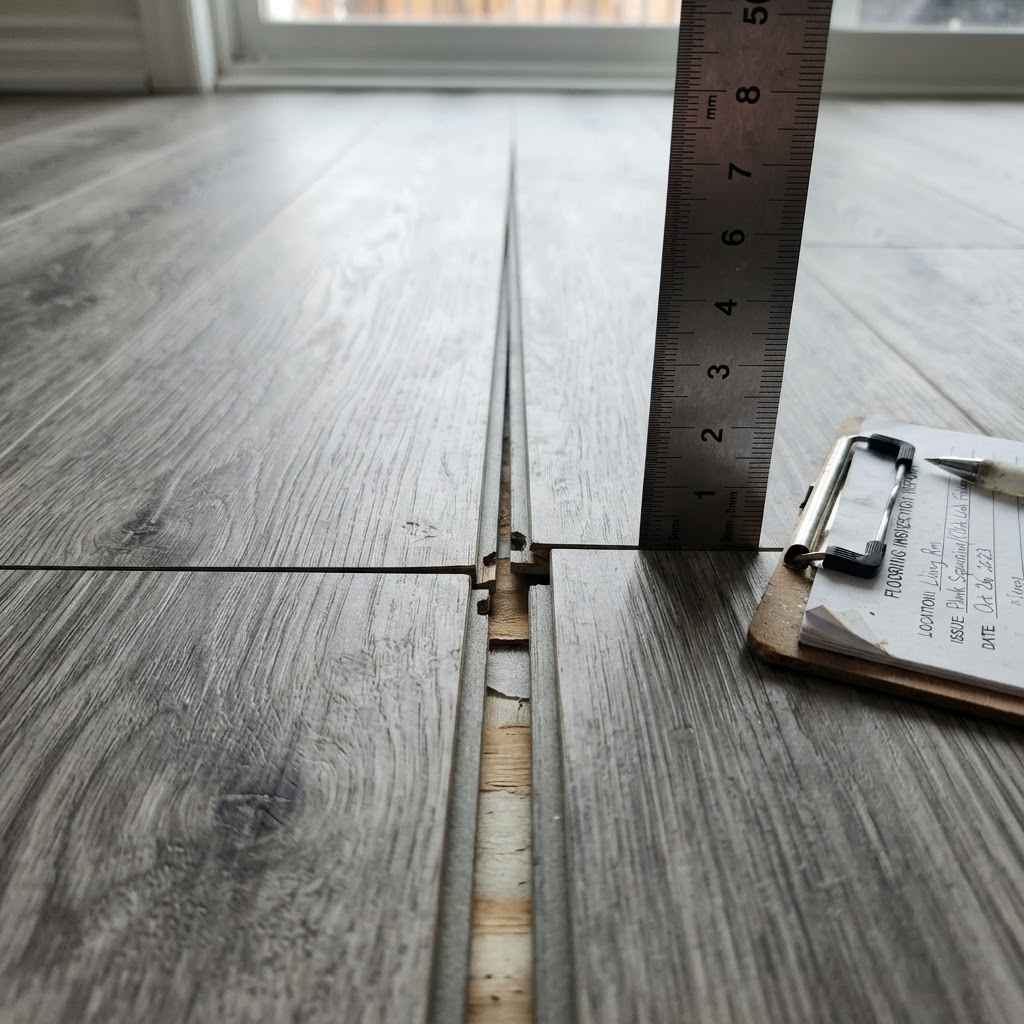
What Is SPC Floor Separation & Joint Failure?
SPC (Stone Plastic Composite), also marketed as rigid core LVP or WPC, is designed to be dimensionally stable — far more so than traditional laminate or solid vinyl. Despite this, joint separation is one of the most frequently documented failure patterns in SPC flooring inspections across Southern California.
The failure occurs when planks thermally expand and the locking mechanism between planks is forced open — or when planks contract in cold conditions and the locking tabs fail in tension. Southern California's combination of direct sunlight, warm temperatures, and temperature cycling between air-conditioned interiors and unshaded areas creates ideal conditions for this failure pattern.
Root Cause Analysis
Why SPC Floors Fail
SPC (Stone Plastic Composite) is marketed as waterproof and dimensionally stable — and it is, on the surface. But SPC still expands and contracts with temperature changes, and when the click-lock locking system is stressed beyond its capacity, joints separate. SPC failures are almost always mechanical: the locking mechanism fails under thermal expansion stress because the floor has nowhere to expand.
Inadequate or Missing Expansion Gaps
All floating SPC floors require manufacturer-specified expansion gaps at every fixed perimeter — walls, door frames, cabinetry, columns. When gaps are absent or undersized, expanding flooring has no relief point and forces joints open.
Direct Sun and Heat Exposure
South-facing windows and unshaded glass can raise floor surface temperatures 30–50°F above ambient air temperature. SPC expands significantly at elevated temperatures, and even high-heat-rated products fail when gaps are inadequate.
Subfloor Flatness Exceeding Tolerance
SPC installed over substrates exceeding 3/16" in 10 feet flatness tolerance causes planks to rock and unlatch under foot traffic or thermal stress. Manufacturer flatness specifications are frequently not verified before installation.
Missing T-Molding Expansion Breaks
Running SPC through large open areas or multiple rooms without manufacturer-required T-molding breaks concentrates cumulative expansion stress until the locking system fails somewhere in the field.
Locking Mechanism Manufacturing Defects
Some SPC products have undersized or improperly formed click profiles that do not retain under normal thermal cycling. These cases require forensic analysis and may warrant manufacturer warranty claims.
What Causes SPC Floor Separation & Joint Failure?
Insufficient Perimeter Expansion Gap
All floating SPC floors require a manufacturer-specified expansion gap at all fixed perimeters. When installers push flooring tight to walls, door frames, or cabinetry, the floor has no room to expand. Compressive forces build across the field and eventually force joints open — sometimes violently. The standard requirement is typically ¼" to ⅜" per 25–30 linear feet.
Direct Sun and Heat Exposure
South-facing windows, unshaded skylights, and sliding glass doors create radiant heat zones that can raise floor surface temperatures 30–50°F above ambient air temperature. SPC products can expand significantly at elevated temperatures, and even products rated for high heat can fail when expansion gaps are inadequate.
Locking Mechanism Manufacturing Defect
Some SPC products have documented locking profile defects — undersized or improperly formed click systems that do not retain under normal thermal cycling. These cases often require forensic analysis and may constitute grounds for manufacturer warranty claims.
Improper Subfloor Flatness
SPC flooring installed over substrates that exceed manufacturer flatness tolerances (typically 3/16" in 10 feet) creates high points that cause individual planks to rock and unlatch under foot traffic or thermal stress.
Large Format or Open Plan Installation Without T-Molding Breaks
Running SPC through large open plan areas or multiple rooms without manufacturer-required T-molding expansion breaks concentrates cumulative expansion stress. At some point in the field, the locking system fails.
Symptoms to Look For
- Visible gaps between planks, particularly in large open areas or near exterior walls
- Joints that appear open in warm afternoon temperatures and close in the morning
- Clicking or popping sounds as planks move against each other
- Raised or tented sections where multiple planks have separated
- Planks that rock or feel loose underfoot
- Gaps wider at room perimeters, especially on south or west-facing walls
What an Inspector Checks
When to Call an Inspector
Contact a certified flooring inspector when:
• Joints are separating in a floor less than 2 years old
• Multiple joints have failed across the field
• The builder, contractor, or manufacturer is denying responsibility
• The matter involves an insurance claim or legal dispute
• You are attempting to document the failure for a warranty claim
Our Inspection Process
Frequently Asked Questions
Is SPC floor separation a product defect or an installation defect?
Most SPC joint separation failures are installation defects caused by inadequate expansion gaps or non-compliant subfloor conditions. However, some cases involve genuine locking mechanism manufacturing defects. A certified inspection distinguishes between the two — which is critical for warranty and legal proceedings.
Can SPC floor separation be repaired?
Minor joint separation can sometimes be corrected by creating additional perimeter expansion gaps. Widespread separation typically requires full removal and re-installation with proper expansion clearances. Damaged locking mechanisms generally cannot be repaired in place.
Will SPC floors separate in Southern California's climate?
SPC floors can perform well in Southern California when installed correctly. The failure rate increases significantly when expansion gaps are omitted, which is common with inexperienced installers. Proper installation with required clearances is essential in warm climates.
Related Flooring Issues
Vinyl / LVP
Vinyl floor buckling — where planks or sheets lift dramatically off the subfloor — is caused by thermal expansion without adequate room, moisture beneath the floor, or adhesive failure in glue-down systems.
Learn moreLaminate
Laminate floor peaking occurs when floating planks buckle upward at joints due to compressive forces from thermal expansion or moisture absorption — almost always related to inadequate expansion clearances.
Learn moreMoisture Diagnostics
Moisture beneath flooring — from concrete vapor emission, plumbing leaks, or groundwater — is the single most common cause of flooring failures. Professional ASTM-certified moisture testing establishes the source, magnitude, and impact.
Learn more