Forensic Diagnostic Knowledge Base
Flooring Issues Library
Expert-level diagnostic guides for every common flooring failure pattern. Technical accuracy. Professional standards. Independent perspective.
Hardwood Flooring
7 guides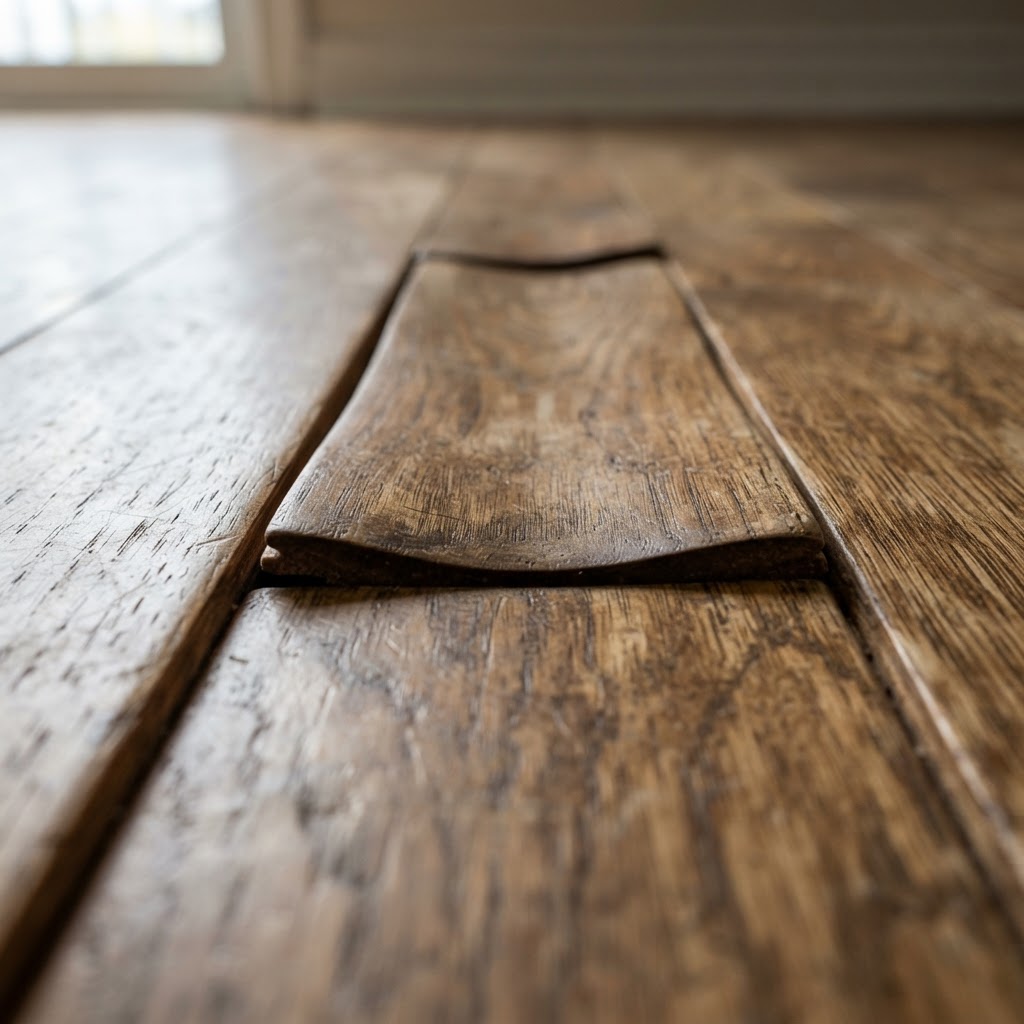
Hardwood Floor Cupping
Cupping occurs when the edges of hardwood planks rise higher than the center, creating a concave wave across the floor surface. It is almost always a moisture-driven failure.
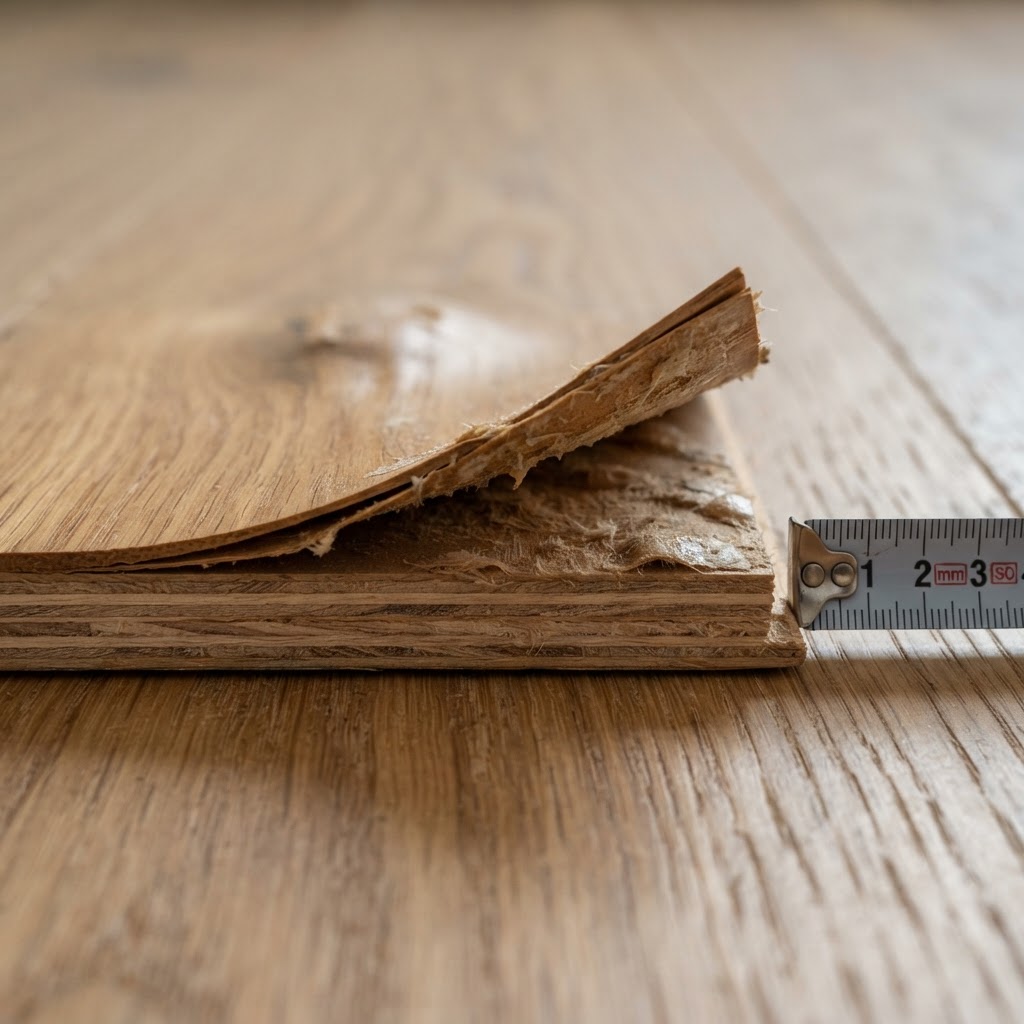
Engineered Wood Flooring Failure
Engineered wood flooring fails when moisture imbalance or thermal stress separates the veneer from its core layers, when subfloor moisture degrades the HDF or plywood core, or when installation deficiencies prevent proper performance.
Hardwood Floor Crowning
Crowning is the inverse of cupping — the center of each board rises higher than the edges, creating a convex profile. It is most often caused by moisture imbalance or by sanding a cupped floor before it has dried.
Hardwood Floor Separating & Gapping
Gaps between hardwood planks develop when wood loses moisture and shrinks. Most gaps are seasonal, but persistent or widening gaps may indicate inadequate acclimation, low humidity, or subfloor moisture cycling.
Hardwood Floor Squeaking
Squeaking in hardwood floors is caused by friction between boards, between boards and fasteners, or between the subfloor and joists. While some squeaking is a normal characteristic of wood, new or worsening squeaks may indicate loose fasteners, subfloor movement, or moisture-related dimensional change.
Hardwood Floor Cracking & Splitting
Cracks and splits in hardwood develop when wood loses moisture rapidly, when it was not properly acclimated before installation, or when fasteners stress the wood during movement. Severe cracking may indicate environmental conditions outside the 30–50% RH range.
Hardwood Floor Discoloration
Discoloration in hardwood floors is caused by UV light exposure, moisture intrusion, chemical reactions within the wood, or finish degradation. Some color change is natural aging, but sudden or localized discoloration may indicate moisture or a product issue.
SPC / Rigid Core
2 guides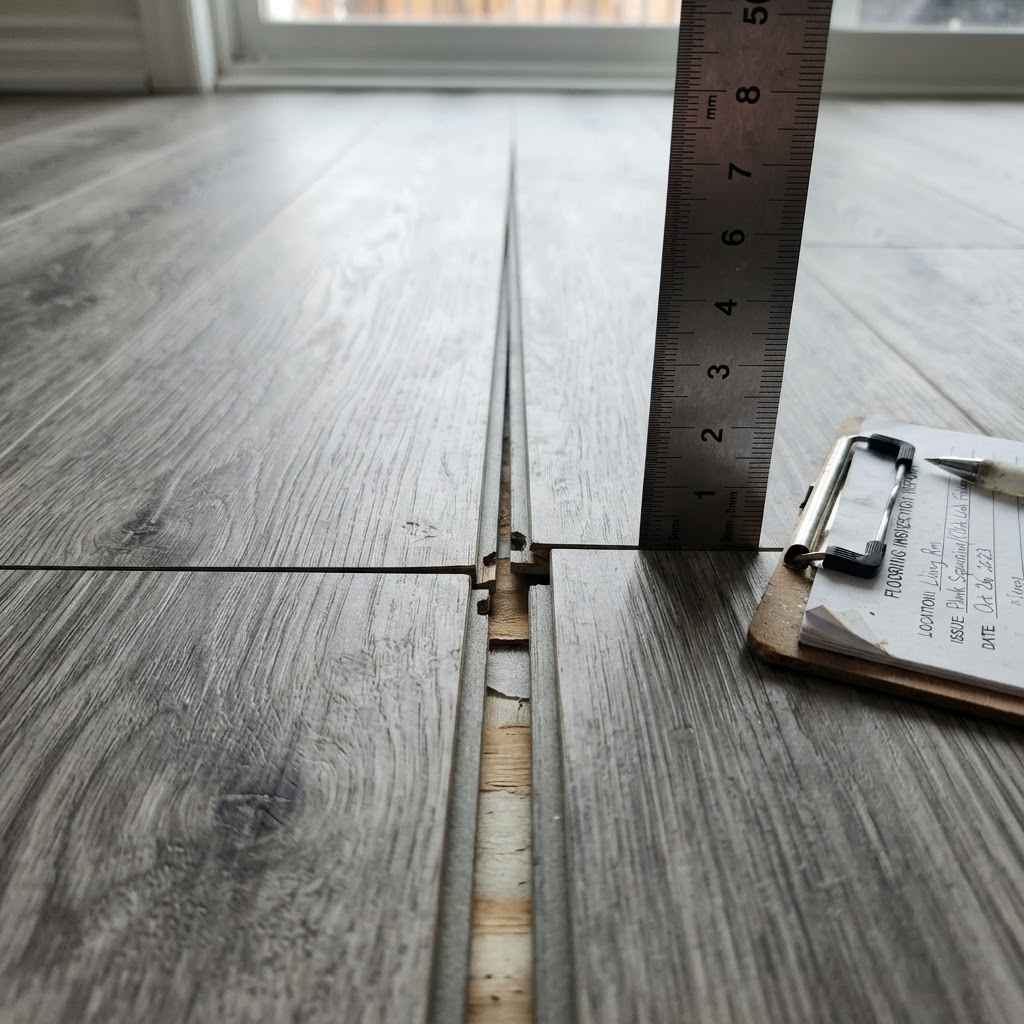
SPC Floor Separation & Joint Failure
SPC (Stone Plastic Composite) and rigid core flooring develops separating or open joints when thermal expansion forces exceed the locking mechanism's capacity — typically caused by inadequate expansion gaps or extreme heat exposure.
SPC Floor Gaps Between Planks
Gaps between SPC planks develop when thermal contraction pulls locking joints apart, when subfloor irregularities cause planks to unlatch, or when the locking profile is defective. Unlike wood, SPC gaps do not self-correct with seasonal changes.
Vinyl / LVP / WPC
8 guides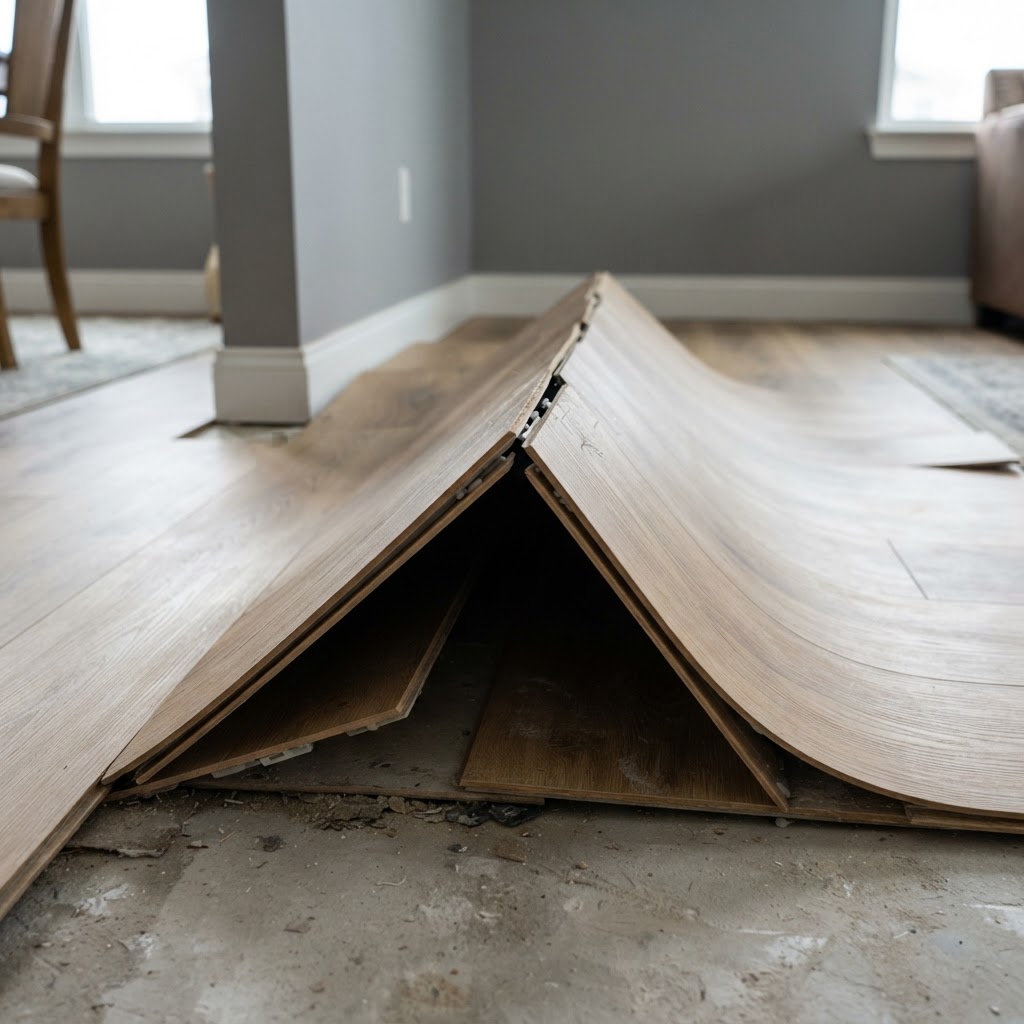
Vinyl Floor Buckling
Vinyl floor buckling — where planks or sheets lift dramatically off the subfloor — is caused by thermal expansion without adequate room, moisture beneath the floor, or adhesive failure in glue-down systems.
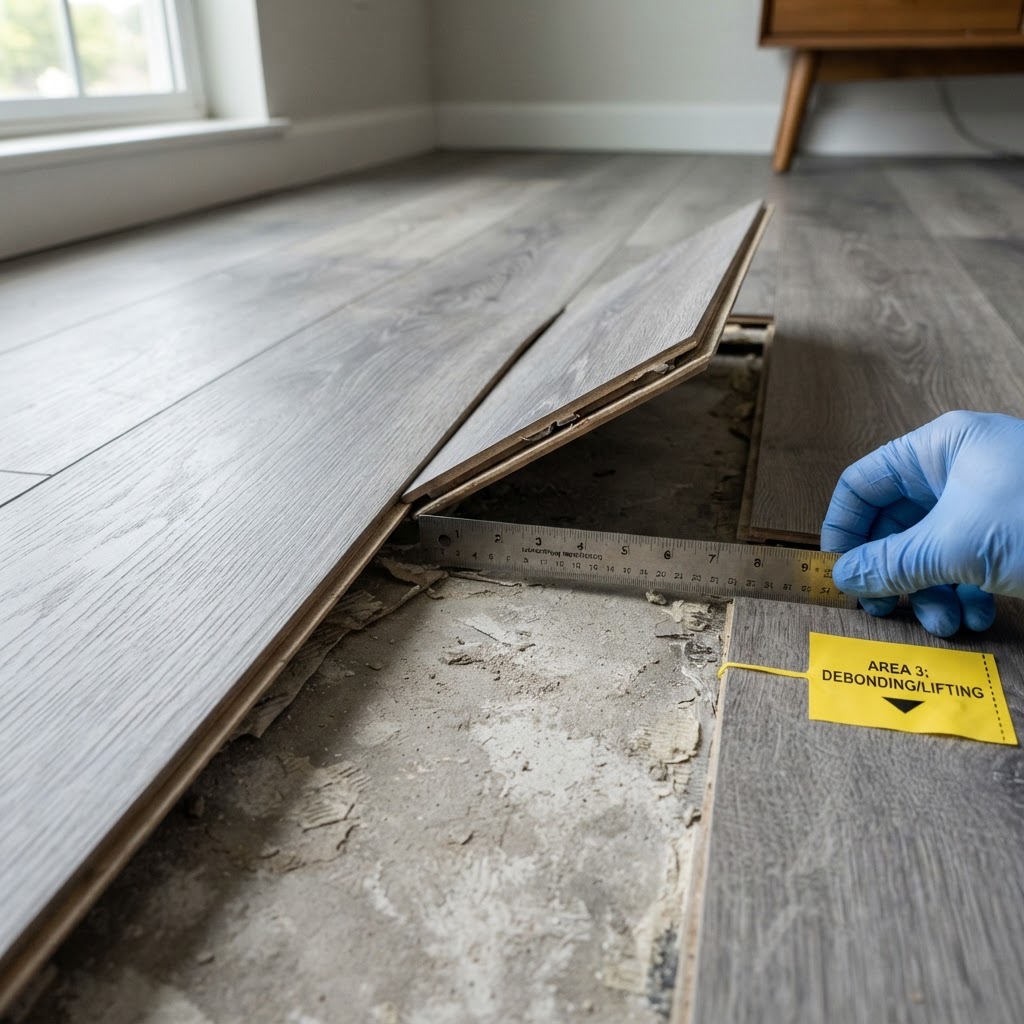
LVP Floor Lifting & Separation
LVP (Luxury Vinyl Plank) lifts and separates when thermal expansion forces exceed locking joint capacity, when subfloor moisture destroys adhesive bonds, or when subfloor irregularities prevent proper contact.
Click-Lock Floor Coming Apart
Click-lock flooring comes apart when locking mechanisms fail — typically from thermal expansion stress, subfloor irregularities, inadequate expansion gaps, or manufacturing defects in the locking profile.
Vinyl Floor Making Noise
Clicking, popping, crackling, or creaking noises in vinyl flooring are caused by subfloor irregularities, thermal expansion movement, loose locking joints, or debris beneath the floor. Some noise is normal, but new or worsening sounds may indicate installation deficiency.
LVP Subfloor Telegraphing
LVP and LVT are thin (2-5mm) and telegraph every imperfection in the subfloor — cracks, ridges, nail heads, and depressions all show through as visible lines, bumps, or shadows. This is almost always an installation deficiency: the subfloor was not prepared to the manufacturer's flatness specification.
LVP Wear Layer Failure & Wear-Through
LVP and LVT wear layer failure occurs when the transparent urethane wear layer wears through, exposing the printed design layer beneath. This is caused by a wear layer too thin for the traffic level, abrasive soil, or maintenance deficiencies. Once the design layer is exposed, the floor cannot be restored.
LVT Loose Tiles & Adhesive Failure
Glue-down LVT tiles become loose when the adhesive bond between the tile and the subfloor fails. The most common causes are subfloor moisture exceeding adhesive tolerance, wrong adhesive selection, contaminated substrate, or improper application. Loose tiles are a progressive failure that spreads over time.
LVT & LVP Indentation Damage
Permanent indentations in LVT and LVP flooring are caused by sustained point loads from heavy furniture, appliances, high heels, or dropped objects that compress the vinyl beyond its recovery capacity. While vinyl has some indentation recovery, heavy or prolonged loads produce permanent dents that cannot be repaired.
Laminate Flooring
4 guides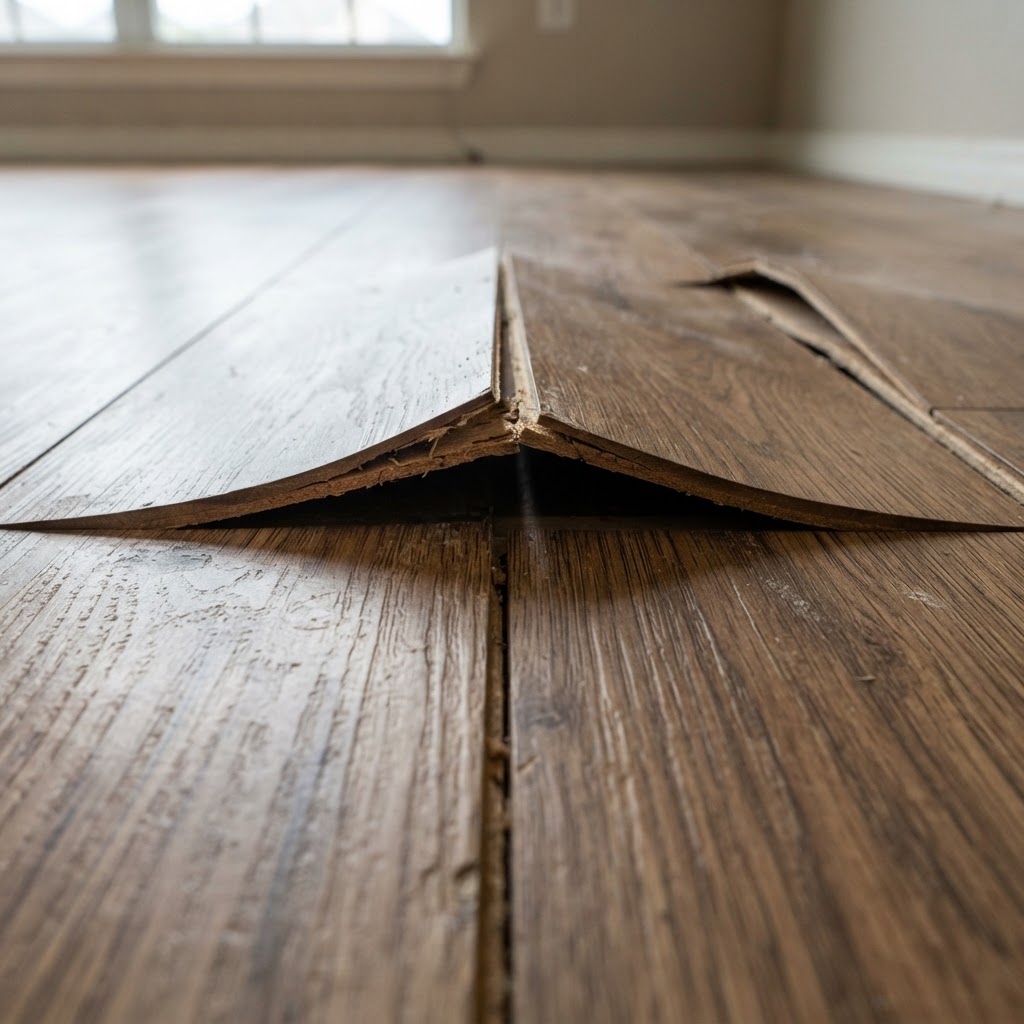
Laminate Floor Peaking
Laminate floor peaking occurs when floating planks buckle upward at joints due to compressive forces from thermal expansion or moisture absorption — almost always related to inadequate expansion clearances.
Laminate Floor Swelling
Laminate flooring swells when its HDF (High Density Fiberboard) core absorbs moisture — from spills, leaks, wet mopping, or subfloor moisture. Unlike vinyl or SPC, HDF swelling is irreversible and typically requires replacement.
Laminate Floor Joints Opening
Gaps at laminate plank joints develop when thermal contraction pulls locking joints apart, when moisture causes dimensional change in the HDF core, or when the locking mechanism has been damaged by expansion stress.
Laminate Floor Lifting
Laminate flooring lifts off the subfloor when the HDF core absorbs moisture and swells, when thermal expansion has no room for relief, or when subfloor moisture degrades the underlayment — all causing the floor to buckle upward.
Tile & Stone
5 guides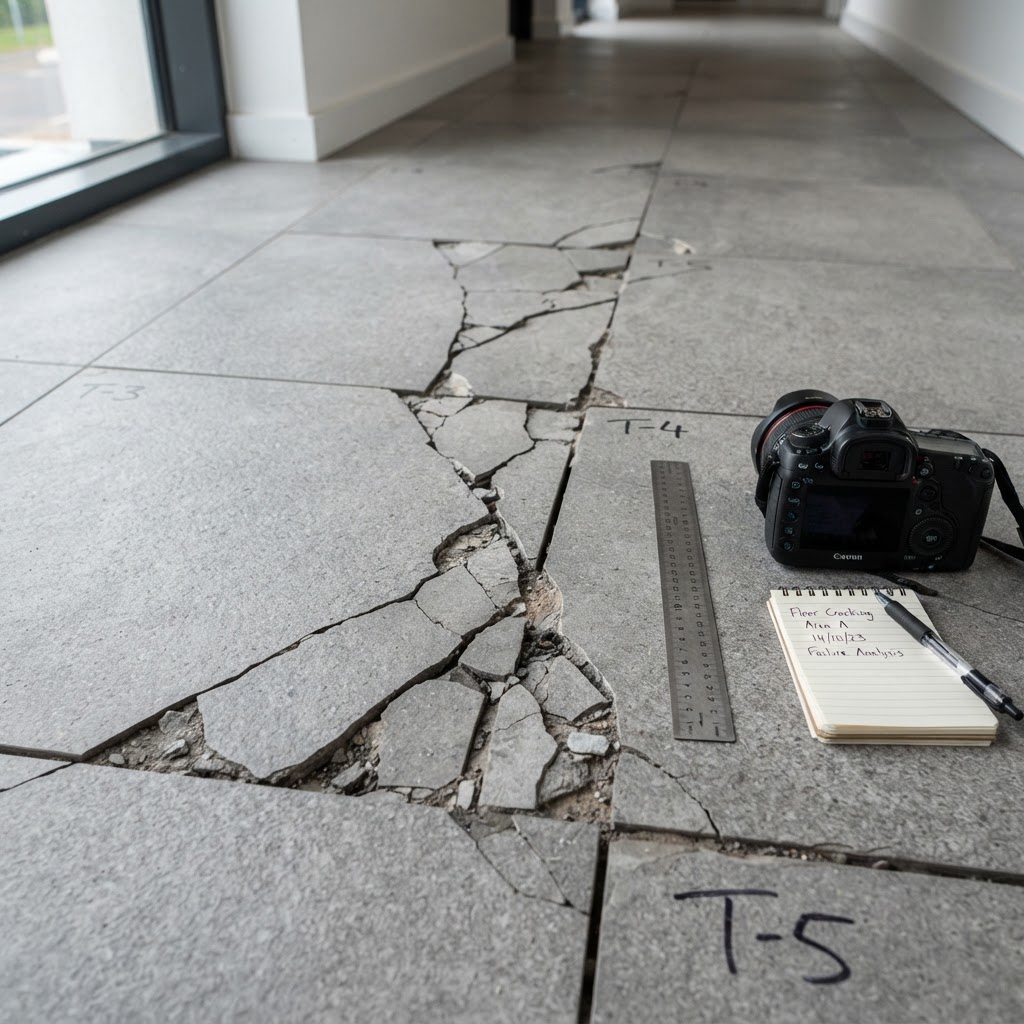
Tile Floor Cracking
Tile cracking is caused by movement beneath the tile — subfloor deflection, concrete slab cracking, thermal stress, or inadequate bond — that exceeds the tile's tensile strength.
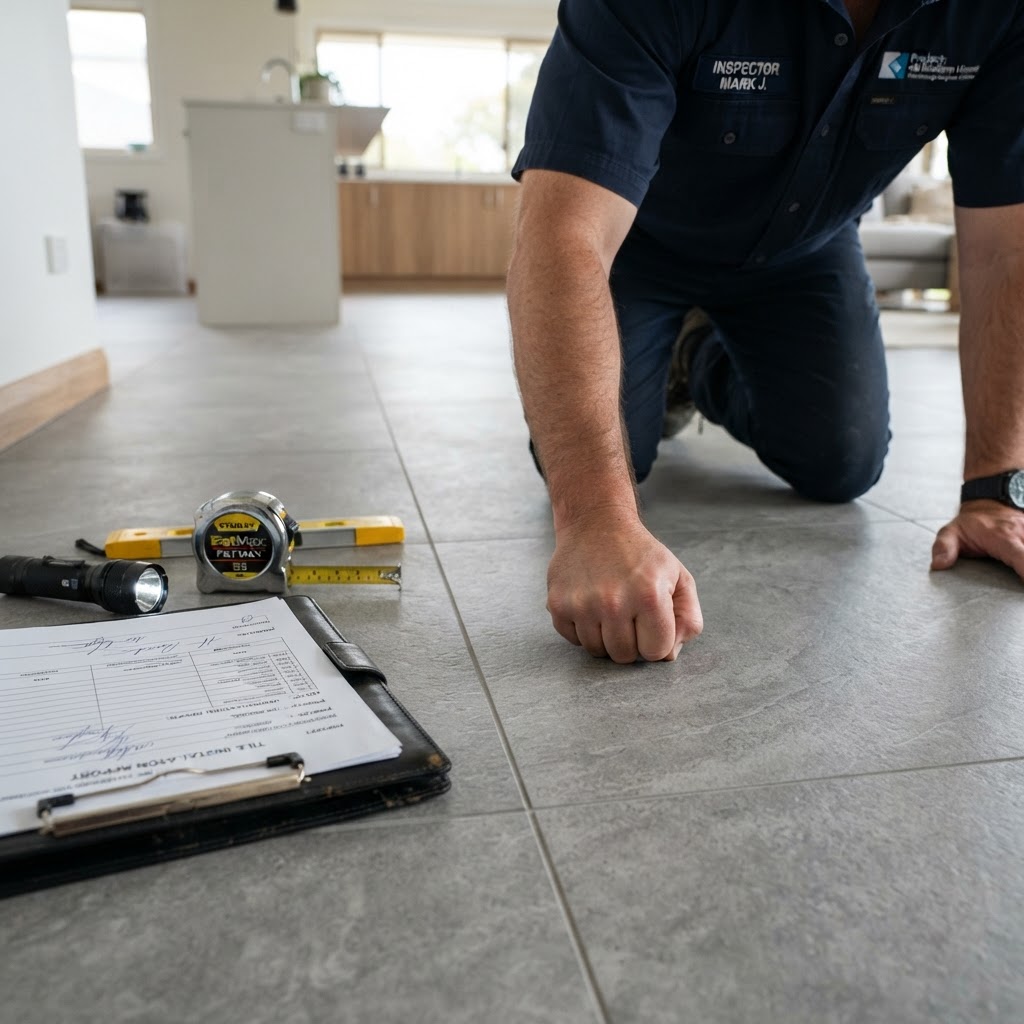
Hollow Tile Sounds (Drummy Tile)
Hollow tile sounds — a drum-like resonance when tapping — indicate that the tile has lost bond with the substrate below. This signals installation deficiency, moisture-induced debonding, or structural movement.
Grout Cracking & Deterioration
Grout cracking is caused by subfloor movement, missing or inadequate movement joints, improper mixing or application, or moisture-related bond failure. It is often an early warning sign that the tile installation has systemic issues.
Loose Tiles & Debonding
Tiles become loose when the bond between the tile and the thinset fails — from inadequate coverage, subfloor movement, moisture-induced debonding, or incompatible materials. Loose tiles are a progressive failure that worsens over time.
Uneven Tile Floor (Lippage)
Uneven tile — where one tile edge sits higher than an adjacent tile — is called lippage. It is caused by subfloor irregularities, inadequate thinset coverage, warpage in large-format tile, or installer workmanship that does not meet industry standards.
Carpet
7 guides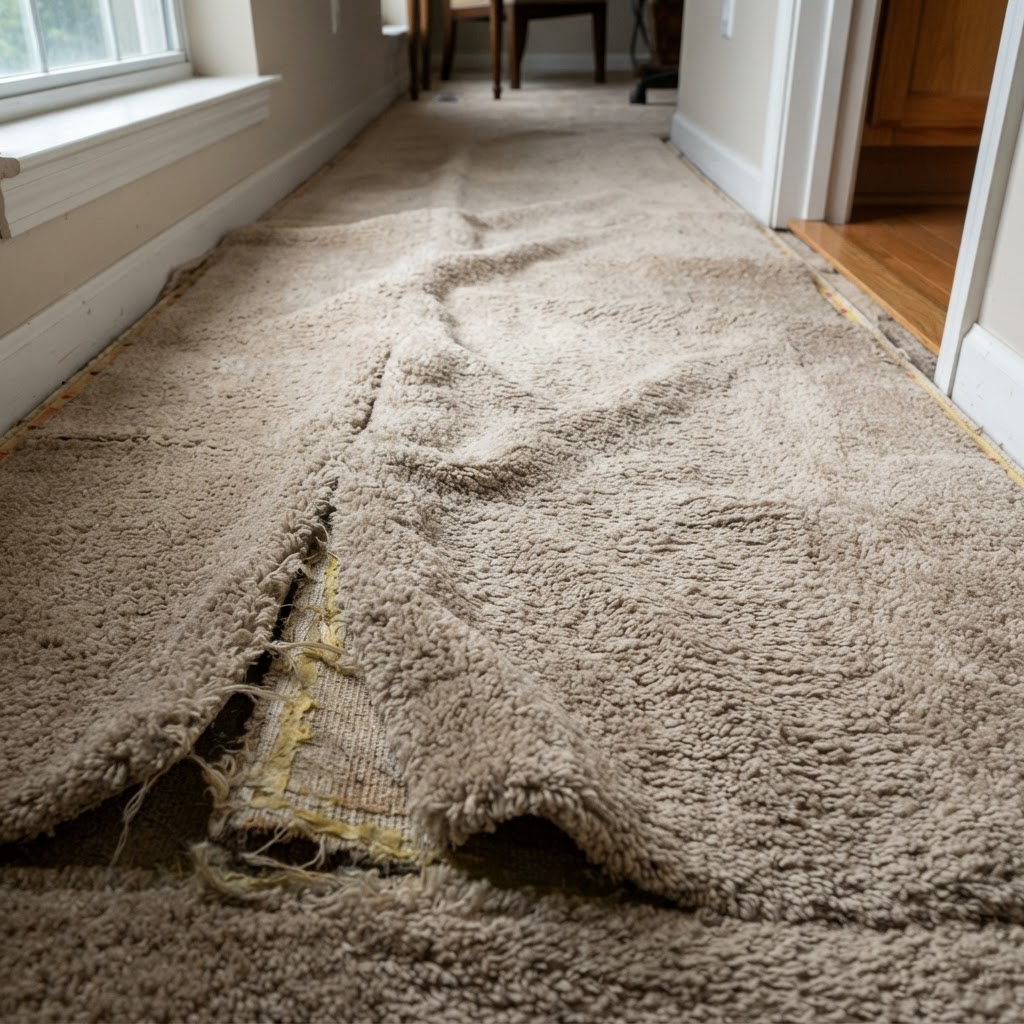
Carpet Buckling & Wrinkling
Carpet buckling and wrinkling occurs when the carpet's secondary backing delaminates from the primary backing, when the carpet was never properly power-stretched, or when humidity and temperature cycling cause dimensional change.
Carpet Seam Separation
Carpet seams separate when the seaming adhesive fails, when the carpet backing delaminates, or when improper seaming technique was used at installation. It is a visible gap at the joint between two carpet pieces that worsens over time.
Carpet Shedding & Fuzzing
Carpet shedding — loose fibers on the surface — is normal in new wool carpet and in cut-pile constructions for the first few months. Persistent or excessive shedding in older carpet or synthetic fibers may indicate a product or installation issue.
Permanent Carpet Stains
Permanent carpet stains result from chemical reactions between the staining substance and the fiber, from substances that cannot be removed by cleaning, or from fiber damage. Not all stains can be removed — understanding the cause determines whether treatment is possible.
Carpet Matting & Crushing
Carpet matting and crushing occurs when fibers in traffic areas flatten and lose their resilience. While some flattening is normal wear, excessive or rapid matting may indicate an inappropriate fiber type, inadequate cushion density, or a product not suited for the traffic level.
Carpet Backing Delamination
Carpet delamination occurs when the latex adhesive bonding the secondary backing to the primary backing fails, causing the two layers to separate. The carpet loses structural integrity, wrinkles uncontrollably, and seams fail. Causes include moisture exposure, manufacturing defects, age, and improper installation.
Carpet Fading & Color Loss
Carpet color loss is caused by UV light exposure breaking down dye chemistry, by chemical reactions from bleach or cleaning products, or by fiber damage. Some fading is normal aging, but rapid or severe color loss may indicate a dye deficiency, inappropriate fiber for the application, or chemical damage.
Moisture Diagnostics
8 guides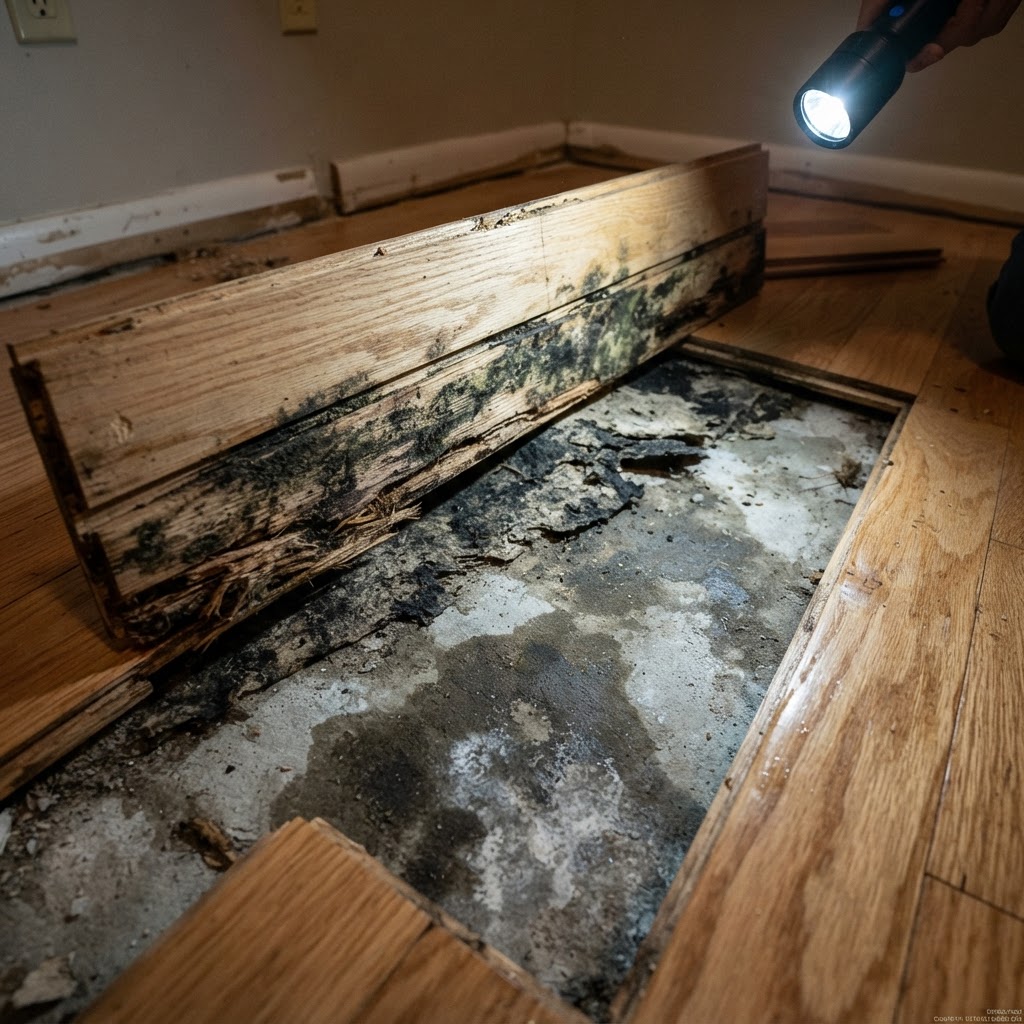
Moisture Damage Under Flooring
Moisture beneath flooring — from concrete vapor emission, plumbing leaks, or groundwater — is the single most common cause of flooring failures. Professional ASTM-certified moisture testing establishes the source, magnitude, and impact.
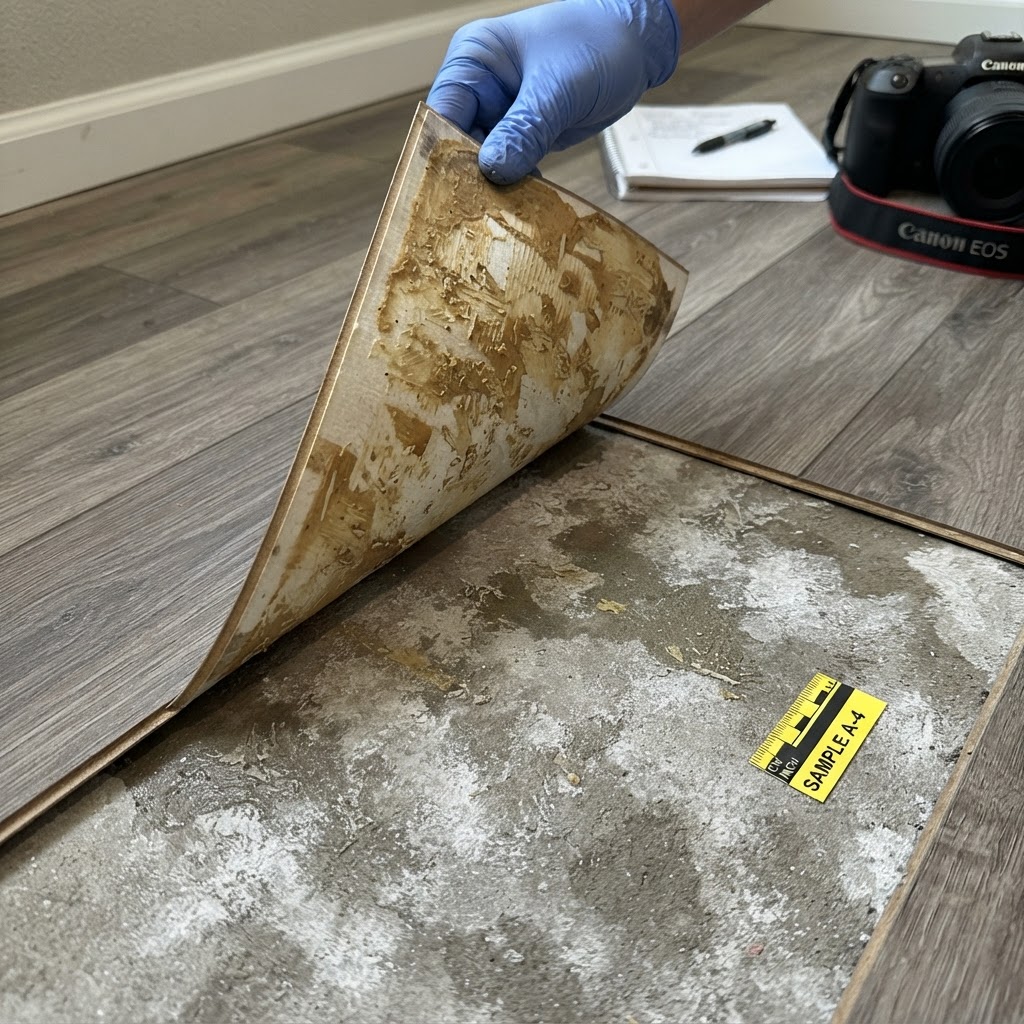
Flooring Adhesive Failure
Adhesive failure in glue-down flooring — vinyl, LVP, hardwood, or tile — causes debonding, hollow sounds, and buckling. The cause is almost always substrate moisture, wrong adhesive selection, or improper application.
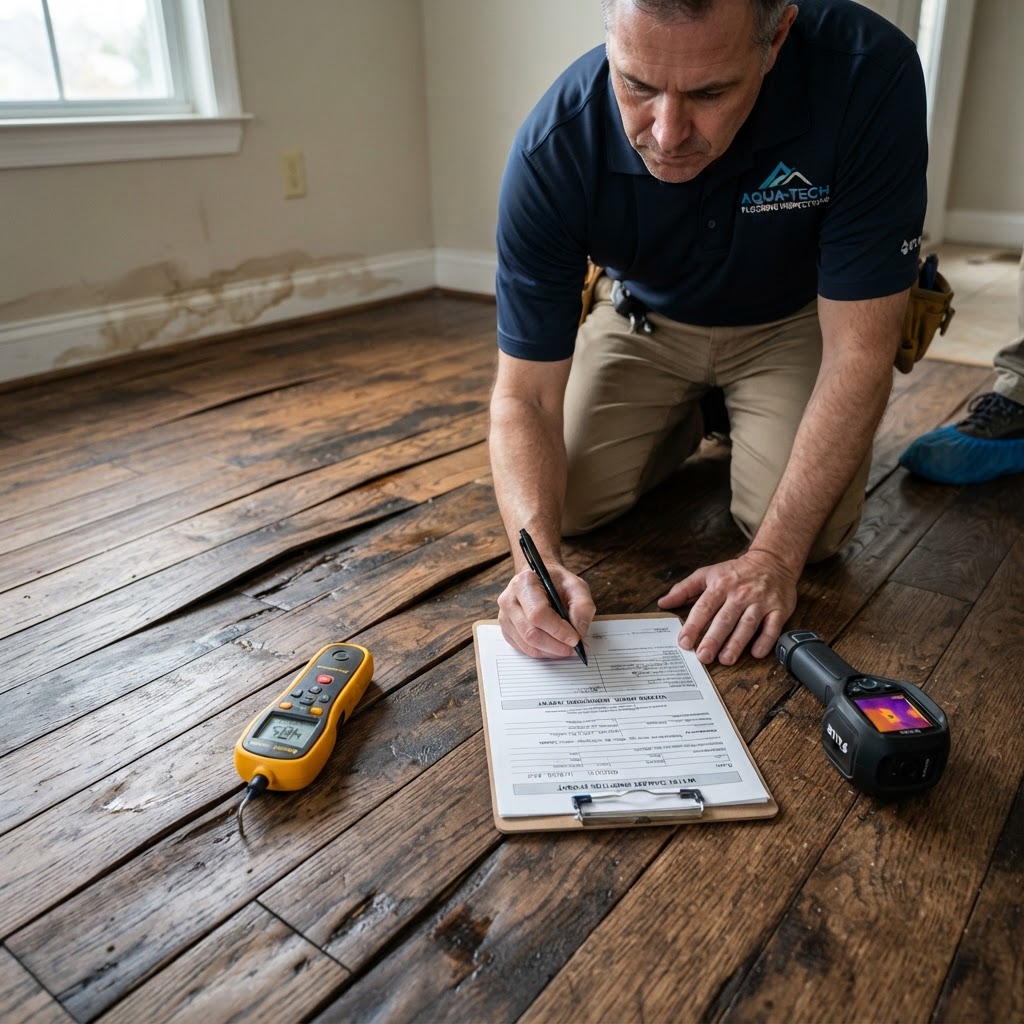
Floor Inspection for Insurance Claims
When flooring is damaged by a water event, fire, or construction defect, an independent certified inspection report provides the objective evidence insurance companies require to evaluate and process your claim.
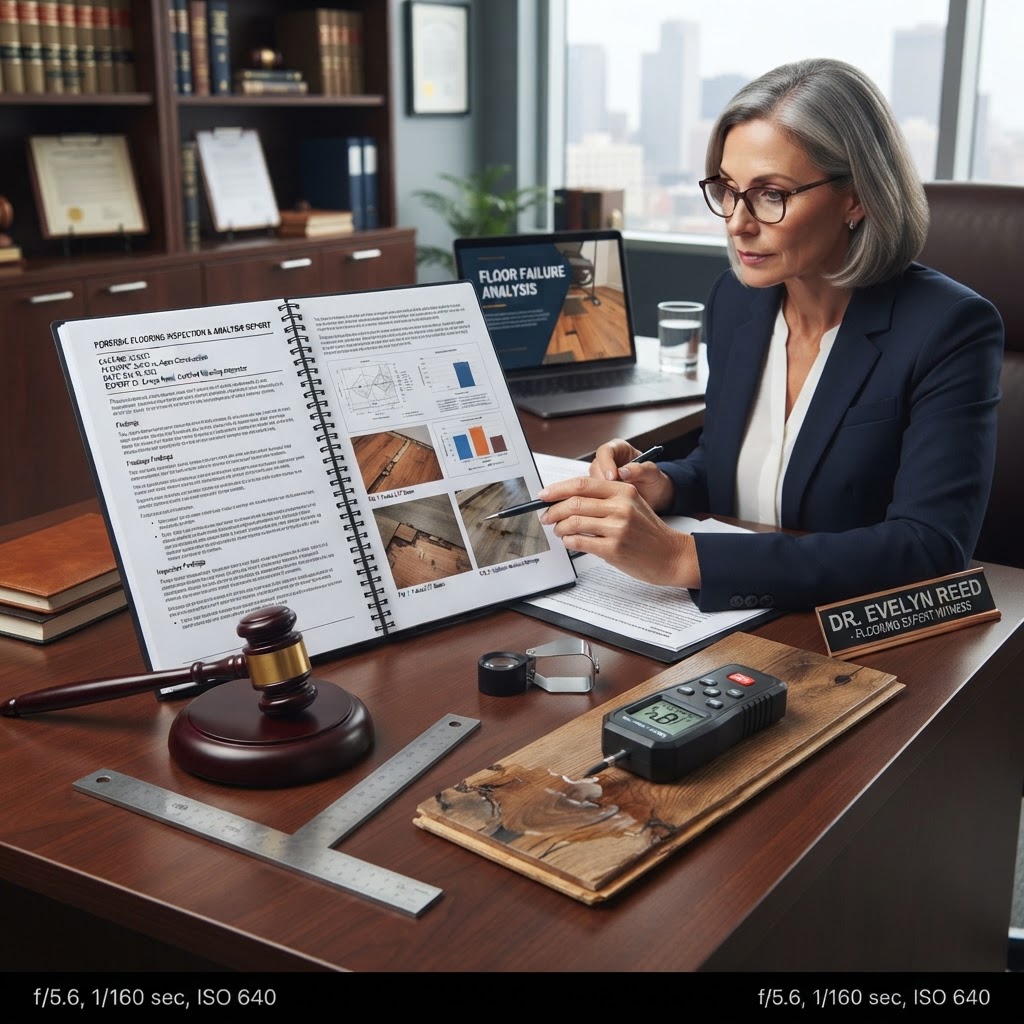
Flooring Expert Witness Services
When flooring disputes reach litigation or arbitration, a certified independent flooring expert provides the technical foundation courts and arbitrators require: standards-based analysis, documented findings, and expert opinion on causation and liability.
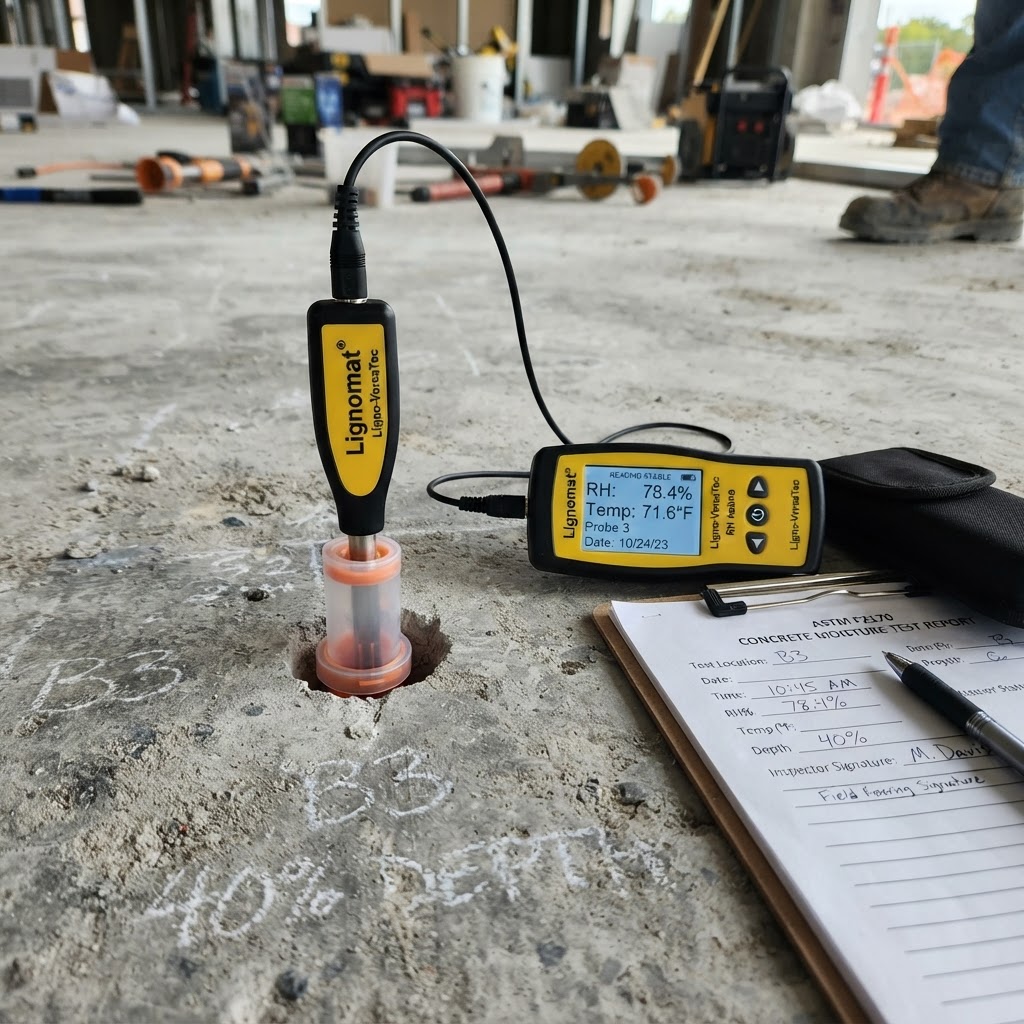
Concrete Slab Moisture & Vapor Emission
Concrete slab moisture vapor emission is the leading cause of flooring failure in Southern California. ASTM F2170 in-situ relative humidity testing is the industry-standard method for assessing slab moisture before and after flooring installation.
Moisture Migration Through Flooring
Moisture migration is the movement of water vapor through concrete slabs, subfloors, and building materials into flooring systems. It is the invisible process behind most flooring failures — and understanding it is essential for prevention and diagnosis.
Concrete Moisture Testing (ASTM F2170 & F1869)
Concrete moisture is tested using two ASTM standards: F2170 (in-situ relative humidity) measures RH within the slab, and F1869 (calcium chloride) measures surface vapor emission rate. Both are required for comprehensive pre-installation assessment.
Floor Buckling After a Water Leak
Floor buckling after a water leak occurs when moisture is absorbed by the flooring, the adhesive, or the subfloor — causing dimensional change, bond failure, or structural damage. Professional moisture mapping and documentation are essential for insurance claims.
Decks & Outdoor Structures
4 guidesDeck Ledger Board Failure
The ledger board connects a deck to the house. When it fails — from improper fastening, missing flashing, or wood rot — the deck can separate from the structure and collapse. Ledger failure is the #1 cause of deck collapses.
Deck Railing Failure
Deck railing failures are among the most dangerous deck defects, often resulting in serious falls and injuries. Common causes include weak post connections, wood rot at post bases, inadequate fastening, and non-compliant baluster spacing.
Deck Wood Rot & Decay
Wood rot is the most prevalent structural problem affecting outdoor decks. It develops silently at connections, post bases, and areas where moisture accumulates — often invisible until a probe test reveals extensive internal decay.
Deck Fastener Corrosion
Corroded fasteners — lag bolts, through-bolts, joist hangers, screws — silently weaken deck structural connections. In coastal Southern California environments, corrosion accelerates and can cause connections to fail long before the wood shows signs of decay.
Independent Certified Inspection
Experiencing a Flooring Issue?
Reading about the problem is the first step. A certified independent inspection provides the documented evidence you need for warranty claims, insurance, or legal proceedings.
Start Your Inspection Request