What Is Hollow Tile Sounds (Drummy Tile)?
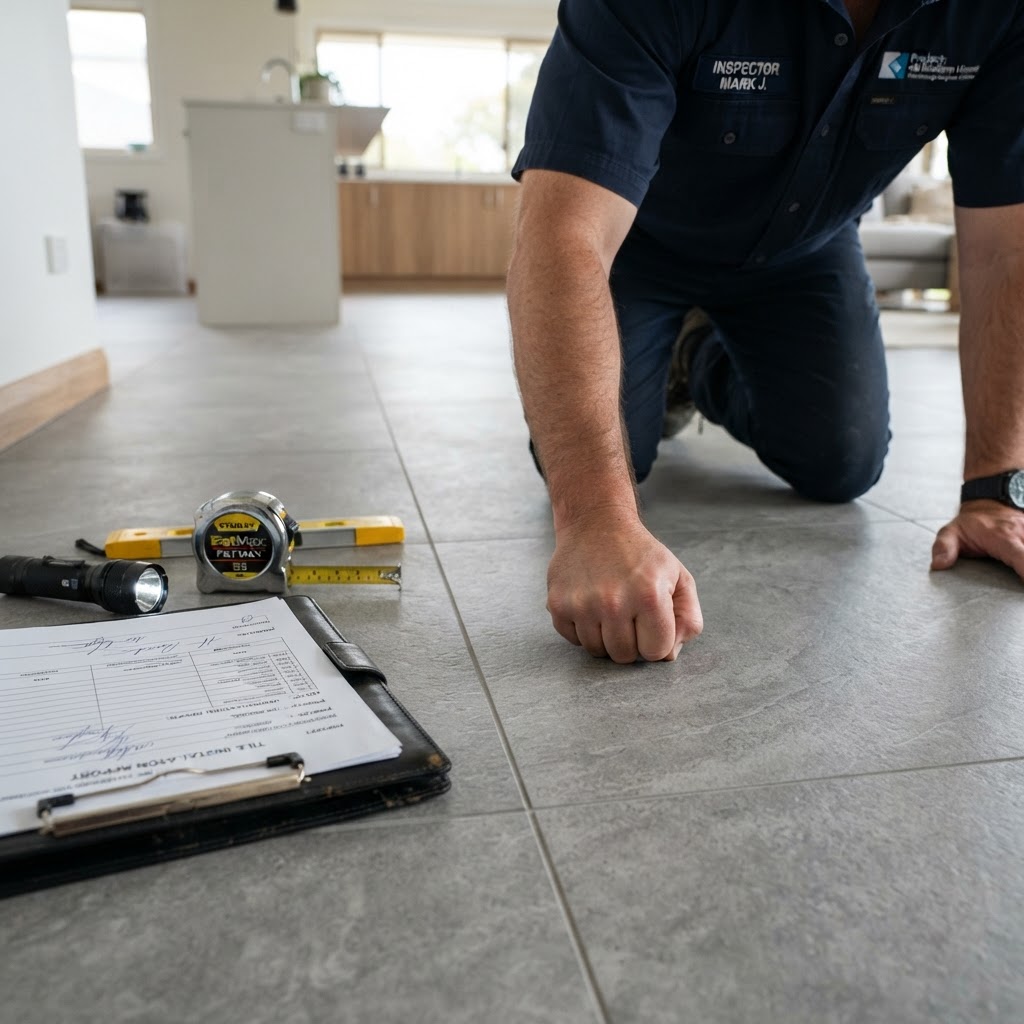
A properly bonded tile installation sounds solid when tapped — a dense, sharp sound with no resonance. When a tile sounds hollow or drum-like, it means there is a void between the tile and the substrate below. The tile is effectively unsupported in that area.
Industry standards (ANSI A108.5) do not define an acceptable percentage of hollow tile — any significant hollow area represents a departure from specified thinset coverage requirements. In forensic tile inspections, hollow tile mapping is performed systematically across the entire installation to establish the full extent of bond failure.
Root Cause Analysis
Why Tile Floors Fail
Tile installations depend entirely on the bond between the tile and the substrate. When that bond is incomplete or fails over time, voids form beneath the tile — producing the hollow, drum-like sound that signals deficiency. Hollow tile is not a cosmetic concern; it is an early warning of progressive bond failure that eventually leads to cracking and debonding.
Inadequate Thinset Coverage
ANSI A108.5 requires 80% mortar coverage for dry interior tile and 95% for wet areas and large-format tile. When installers use incorrect trowel technique or skip back-buttering, large voids remain beneath tiles from day one — the primary cause of hollow sounds.
Failure to Back-Butter Large-Format Tile
TCNA and ANSI standards require back-buttering for large-format tiles (15" or larger). Without it, tiles bridge over trowel ridges and leave significant air voids that produce hollow resonance and eventually crack under point loads.
Subfloor Movement Shearing the Bond
Even an initially well-bonded tile can lose adhesion when the substrate moves. Wood subfloor deflection, concrete slab cracking, or structural settlement shears the thinset bond, creating hollow areas after installation.
Moisture-Induced Debonding
Water intrusion beneath tiles degrades thinset bond progressively. Bathroom, kitchen, and laundry tiles frequently develop hollow sections adjacent to water sources — not from initial installation failure, but from ongoing moisture degradation of the bond layer.
Incorrect Thinset Selection
Using the wrong thinset for the tile type or substrate — such as mastic where modified thinset is required, or non-modified where modified is specified — produces a bond that never achieves its designed strength and degrades prematurely.
What Causes Hollow Tile Sounds (Drummy Tile)?
Inadequate Thinset Coverage
The most common cause. When notched trowel application does not achieve the required mortar contact coverage, voids exist beneath the tile from the moment of installation. These voids cause hollow sounds and eventual tile cracking or debonding.
Failure to Back-Butter Large-Format Tile
TCNA and ANSI standards require back-buttering (applying thinset to the back face of the tile in addition to the substrate) for large-format tiles. Without back-buttering, large tiles bridge over trowel ridges and leave significant air voids that cause hollow sounds.
Subfloor Movement Causing Bond Failure
Even an initially well-bonded tile can lose its bond over time if the substrate moves excessively. Wood subfloor deflection, concrete slab cracking, or structural settlement can shear the thinset bond, creating the hollow condition after the fact.
Moisture-Induced Debonding
Water intrusion beneath tiles degrades the thinset bond over time. Bathroom, kitchen, and laundry room tiles frequently develop hollow sections adjacent to water sources — not from initial installation failure, but from progressive moisture degradation of the bond.
Symptoms to Look For
- Drum-like or hollow resonance when tapping tile face with knuckle
- Hollow sounds concentrated at tile centers (indicating inadequate coverage)
- Hollow sounds at tile edges (indicating edge debonding)
- Grout joint cracks adjacent to hollow tiles
- Tile cracking within hollow sections
- Movement or flex when walking across affected tiles
What an Inspector Checks
When to Call an Inspector
A certified tile inspector should be engaged when:
• More than a few tiles sound hollow in a new installation
• Hollow tile is widespread across the field
• Tiles are cracking adjacent to hollow sections
• A contractor warranty claim is being disputed
• Commercial tile installation requires compliance documentation
Our Inspection Process
Frequently Asked Questions
How much hollow tile is acceptable?
ANSI A108.5 does not define an acceptable percentage of hollow tile — it sets minimum coverage requirements. Any tile with hollow sound at its center is below the required coverage standard. Industry experts generally consider more than 5–10% hollow tile to be a significant installation defect requiring remediation.
Can hollow tile be fixed without removing it?
In some cases, epoxy injection grouting can be used to fill voids beneath hollow tiles. However, this technique is limited to specific conditions and does not restore full coverage compliance. When hollow tile is widespread or accompanied by cracking, full removal and re-installation is typically required.
Related Flooring Issues
Tile & Stone
Tile cracking is caused by movement beneath the tile — subfloor deflection, concrete slab cracking, thermal stress, or inadequate bond — that exceeds the tile's tensile strength.
Learn moreMoisture Diagnostics
Moisture beneath flooring — from concrete vapor emission, plumbing leaks, or groundwater — is the single most common cause of flooring failures. Professional ASTM-certified moisture testing establishes the source, magnitude, and impact.
Learn more