What Is Floor Inspection for Insurance Claims?
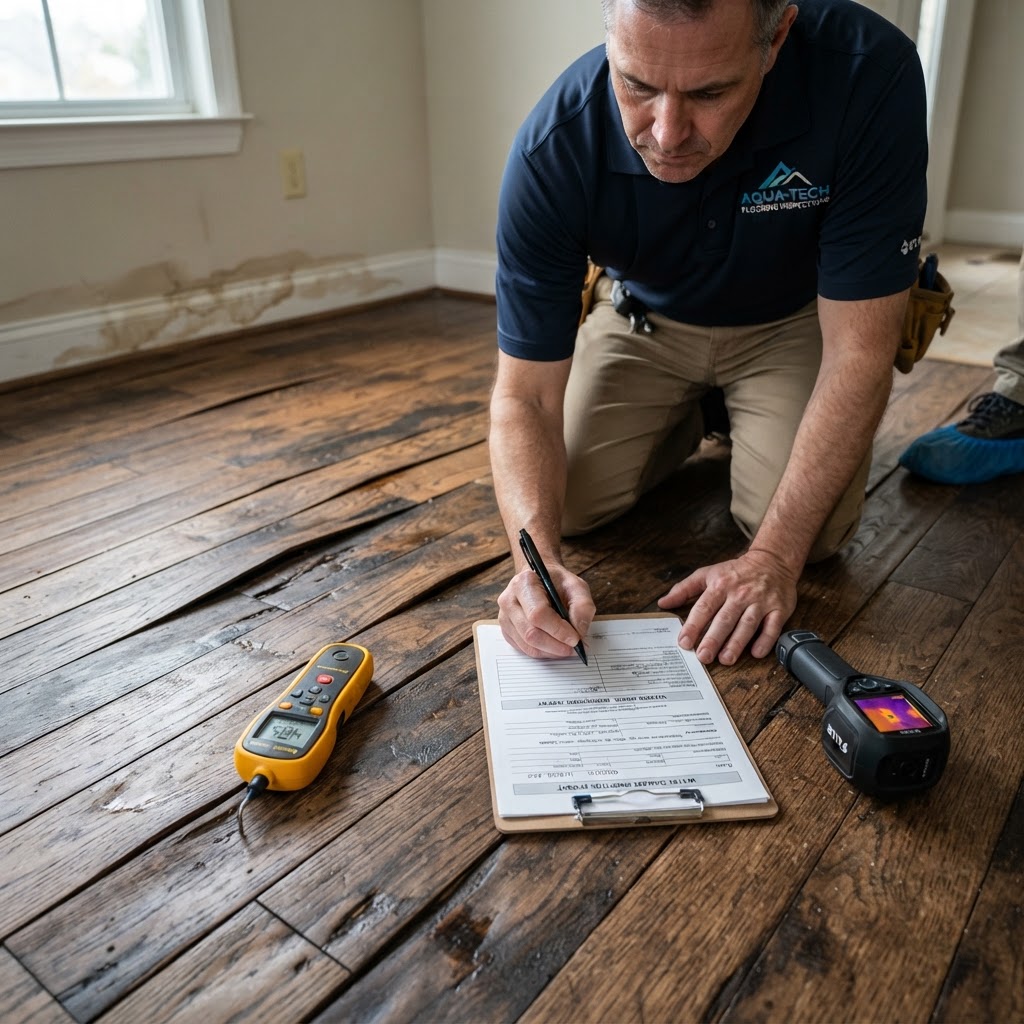
Flooring insurance claims — whether from burst pipes, appliance failures, roof leaks, or neighbor-related water events — require objective, documented evidence to support coverage evaluation. Insurance adjusters are trained to evaluate damage, but they are not independent certified flooring inspectors. Their assessment focuses on the cost of repair or replacement; it does not always address the full scope of damage, the cause, or whether the flooring was installed to the standards required for proper performance.
An independent certified flooring inspection provides something the adjuster's report cannot: a third-party technical evaluation based on industry standards — NWFA, ASTM, TCNA, ANSI — that documents what happened, why, and what the correct scope of remediation should be.
In Southern California, common insurance claim scenarios include slab leak damage to hardwood floors, water heater failures affecting LVP and tile, appliance supply line failures, and neighbor-to-neighbor water intrusion in condominiums and apartment buildings.
What Causes Floor Inspection for Insurance Claims?
Slab Leak Damage
Under-slab plumbing failures are particularly common in post-WWII Southern California construction. Copper and galvanized supply lines corrode and develop pinhole leaks that saturate the slab before surfacing. The flooring above absorbs moisture vapor and contact moisture that causes cupping, delamination, or adhesive failure — often well before the leak is discovered.
Appliance Supply Line Failure
Refrigerator water lines, dishwasher supply hoses, washing machine connections, and water heater failures are among the most common sudden-and-accidental water events affecting flooring. These events can saturate large areas of flooring rapidly, and the full damage extent may not be visible for days to weeks.
Roof or Window Leak to Flooring
Water intrusion from roof defects or failed window seals can travel along structural members and saturate flooring in areas not directly below the water entry point, making source identification challenging without thermal imaging and moisture mapping.
Neighbor Water Intrusion in Multi-Unit Buildings
In condominiums and apartments, water events from units above — toilet overflows, bathtub overflows, dishwasher failures — can migrate through the floor-ceiling assembly and damage flooring below. In these cases, independent inspection documentation is critical for determining the damage scope and establishing the responsible party's liability.
Symptoms to Look For
- Cupping or warping in hardwood or engineered wood after a water event
- Buckling or separation in LVP, SPC, or laminate
- Swollen or soft spots in the subfloor
- Dark staining or discoloration beneath vinyl or tile
- Hollow sounds in glue-down flooring after water exposure
- Mold growth at baseboards or under flooring
What an Inspector Checks
When to Call an Inspector
Call for an independent inspection when:
• An insurance adjuster has assessed damage you believe is underestimated
• Your flooring claim has been denied or disputed
• You need documentation to support a supplemental claim
• A neighbor's water event damaged your flooring and liability is disputed
• You want an independent scope of loss before accepting a settlement
Our Inspection Process
Frequently Asked Questions
Do I need an independent inspection if I already have an adjuster's report?
An adjuster's report reflects the insurance company's position on the scope and value of the claim. An independent certified inspection provides an objective technical assessment that may identify additional damage, a broader scope of replacement, or a different cause determination. Having an independent report gives you evidence to negotiate or dispute the adjuster's findings.
Will an independent inspection help my claim?
It depends on what the inspection finds. If the inspector documents damage or cause that the adjuster underestimated, the report can support a supplemental or disputed claim. If the independent findings align with the adjuster's assessment, you have corroborating documentation. In either case, you have an objective technical record.
What types of flooring damage are covered by homeowner's insurance?
Most homeowner's policies cover flooring damage from sudden and accidental events — burst pipes, appliance failures, roof leaks from storm damage. Long-term seepage, flooding from outside sources (typically covered by separate flood insurance), and maintenance-related moisture are generally excluded. An independent inspection establishes whether the event qualifies as sudden and accidental.
Related Flooring Issues
Hardwood Flooring
Cupping occurs when the edges of hardwood planks rise higher than the center, creating a concave wave across the floor surface. It is almost always a moisture-driven failure.
Learn moreVinyl / LVP
Vinyl floor buckling — where planks or sheets lift dramatically off the subfloor — is caused by thermal expansion without adequate room, moisture beneath the floor, or adhesive failure in glue-down systems.
Learn moreMoisture Diagnostics
Moisture beneath flooring — from concrete vapor emission, plumbing leaks, or groundwater — is the single most common cause of flooring failures. Professional ASTM-certified moisture testing establishes the source, magnitude, and impact.
Learn more